Friday, September 19, 2014

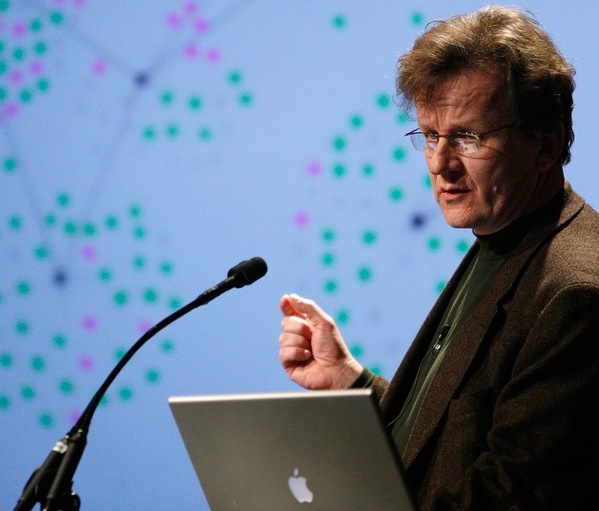
SNA All Star: Phillip Bonacich

Phillip Bonacich holds his PhD from Harvard University in Sociology and is currently a professor at UCLA that focuses on Social Networks.  His research is in the areas of Mathematical Sociology, Social Psychology, Quantitative Methodology.

Dr. Bonacich has contributed to social network analysis by examining the power of network, specifically looking at measures of power and centrality, as well as examining structures of exchange networks through a mathematical sociology lens. 

He has been a player in the field since the late seventies, but the bulk of his publications regarding social networks are from the late eighties and later.  His most sited work, “Power and Centrality: A family of measures” (1987) challenged the idea that network centrality is positively related to power in exchange networks. The bulk of his work has focused on the power of exchange networks and coalitions within exchange networks. 

He uses quantitative measures to examine links between networks and the implications for power of those networks.  In the Social Networks Journal in 2003, he examines asymmetric networks and contends that eigenvector-like measures cannot measure levels of centrality in all networks, specifically asymmetric ones. 

While much of his work has been published alone, collaborators include Paulette Lloyd of UCLA and Elisa Jayne Bienenstock of Georgetown University.

Some works include:

“Power and centrality: A family of measures.” American journal of sociology, 1987

"The Evolution of Exchange Networks: A Simulation Study." Journal of Social Structure. 2001 

"An Algebraic Theory of Strong Power in Negatively Connected Exchange Networks," Journal of Mathematical Sociology. 23(1999)203-224.


"Eigenvector-like Measures of Centrality for Asymmetric Relations." Social Networks 23 (2001):191-201.

SNA All-Star: James S. Coleman

James Coleman was a sociologist first trained by Robert Merton and Paul Lazarfeld. Both professors were major influences in his work particularly in his mathematical and structural approaches. His most recognized SNA-related work in the sociology and sociometry fields spanned a long period from the late 1950s to the 1990s.

Two major publications that he is most known for are Medical Innovation: A Diffusion Study in 1966 with Elinu Katz and Herbert Mentzel and Foundations of Social Theory in 1990. His diffusion study provided one of the earliest uses of systematic and empirical research on diffusion in the social network field. The method of fixed recall garnered criticism, but his research into how “doctors’ willingness to prescribe a new antibiotic coincided” with their own surrounding network is often cited to explain diffusion and the role of personal relations today (Prell 2012, p 64.) But what Coleman is most known for are his theories of social action and social capital in his Social Theory book.


 According to Coleman’s analysis, social capital is “any kind of social relationship that is a resource to a person.” (Coleman 1990, p 35). This concept helps reinforce the benefits of professional networks (and many other types of social networks) and the resources that can be found through relationship links. He is considered one of the founding minds of the concept of social capital. In fact his article “Social Capital in the Creation of Human Capital” in the American Journal of Sociology in 1988 is recorded as being cited 26,301 times.

Thursday, September 18, 2014

SNA All Star: Barry Wellman


Canadian-American sociologist Barry Wellman is one of the pioneering minds of social network theory and methodology. He founded the International Network for Social Network Analysis and currently serves as the director University of Toronto's Net Lab, a scholarly organization that studies "the intersection of social networks, communication networks, and computer networks."

Wellman's work uses a highly interdisciplinary approach, collaborating with the likes of archivists, scientists, lawyers, statisticians, communication scientists and theologians to develop his unique ideas of social network theory. Particularly, Wellman's research focuses on "computer networks as social networks" and "community networks as social networks." Wellman discusses how people have progressed from "little boxes" (densely clustered groups of people) to "glocalized" networks (sparseley-knit clusters of both globally and locally linked households) to what he calls "networked invidualism" (sparseley linked individuals linked together that transcend limitations of  physical space.) More recently, Wellman has shifted his research focus to the internet, studying topics such as our currently wired state contributing to "glocalization" and international comparisons of internet usage. 

Wellman is vastly published and connected to several thinkers.  He has written on "network of networks" and "the networked city" with behavioural economist Paul Craven, the "community question" with Bernie Hogen, and "hyperconnectivity" with Anabel Quan-Haase. Notably,  Wellman (along with the late S.D. Berkowitz) co-edited one of the definitive texts of social network analysis Social Structures: a Network Approach, published by Cambridge University Press in 1988. He also recently co-authored Networked: The New Social Operating System with Lee Rainie (the Director of the Pew Internet and American Life Project, published by MIT Press in Spring 2012. 

In 2014, the Oxford Internet Institute awarded Barry Wellman the Lifetime Achievement Award, "in recognition of his extraordinary record of scholarship in social network theory and Internet research which has contributed so much to our understanding of life online." 


SNA All-Star: David Krackhardt

David Krackhardt is Professor of Organizations at the Heinz School of Public Policy and Management and the Graduate School of Industrial Administration, Carnegie Mellon University. He previously held faculty positions at Cornell's Graduate School of Management, the University of Chicago's Graduate School of Business, INSEAD (France) and the Harvard Business School. He received a BS degree from the Massachusetts Institute of Technology and a PhD from the University of California, Irvine, and as such was probably influenced by the work of Lin Freeman, Martin Everett and Steve Borgatti. His published works span the fields of psychology, sociology, anthropology and management.

He focuses on how theoretical insights and methodological innovations from network analysis can deepen our understanding of how organizations function. He coined the concept of "cognitive social structures", i.e. when individuals provide their perceptions of the entire network in which they are embedded. He empirically has related these cognitive social structures to turnover, reputations and power in organizations.

Current research interests includes developing models to understand how innovations are diffused, experimenting with new ways to visualize networks, identifying effective leverage points for organizational change, and exploring the roles of Simmelian (super-strong) ties in organizations.


Krackhardt developed the cleverly named KrackPlot, a program for network visualization that allows network analysts to upload graphs from UCINET or Mathematica and produce output in GIFs or other visual formats. Each node can be assigned a number of attributes, denoted by color and shape, and you can click to add new nodes. KrackPlot will assign colors and shapes automatically based on the attributes, or you can designate them.

SNA All-Star: Harrison White

My contributor is Harrison White. One of his first major findings observed how vacancy chains are created when high-level employees leave an organization, making room for promotion throughout a hierarchical organization. White published this finding in a book called Chains of Opportunity (1970). White’s work in the study of social networks, since the 1960’s, led to the development of a systematic means, through the application of mathematic techniques, for uncovering positions and roles from social network data. His examination of roles and positions, utilizing block models and emphasizing the importance of multiple relations, turned the idea of ‘social networks’ into an analytical concept. This approach views networks as complete networks, as opposed to earlier approaches which focused on individual ego networks. Publications relating to these studies were done in collaboration with Boorman (1976), Heil (1976), Lorraine(1971), among others. One publication of the study can be found in the American Journal of Sociology—Social Structure from Multiple Networks (1976). With respect to his indirect influence, White is also credited with shaping a generation of social network scholars, during his time as a professor at Harvard University. While there, he became the head of what came to be referred to as the ‘Harvard Revolution’ in social network analysis, having instructed influential scholars such as Mark Granovetter, Philip Bonacich, and Barry Wellman.  

SNA All-star: Valdis Krebs

Valdis Krebs is a researcher and author who works in the field of social and organizational network analysis, currently Founder and Chief Scientist at Orgnet. The main theme of his work could be described as networks in politics; he has researched politically-inclined book networks and the flow of knowledge in social movements, but Krebs is most well-known for his analysis of terrorist groups. After the September 11 attacks, Krebs was the first to use public information and newspaper clippings to produce a partial map of the organization behind the attacks - "likely the most cited public analysis of the 9/11 network" called Uncloaking Terrorist Networks.  Another oft-cited article is Mapping Networks of Terrorist Cells.

Krebs has done his main body of work relating to terrorism and politics by himself; however, he has collaborated with others on understanding networks of infectious diseases such as tuberculosis (including McKenzie Andre, Kashef Ijaz, Jon D Tillinghast, Lois A Diem, Beverly Metchock, Theresa Crisp, and Peter D McElroy), as well as collaborated on papers about the flow of knowledge in corporate environments (with Charles Allan Armstrong, Ryan K Lahti, Eric D Darr Petri Vasara, Laura Peuhkuri, and Eero Eloranta). He also has developed InFlow, an advanced tool for visualizing networks. Krebs has established himself as a modern go-to SNA analyst, appearing in Wired Magazine and Popular Science and attracting contracts with large corporations such as Google, Deloitte, and the CDC, among others. More on Valdis.

SNA All-Star: Walter Powell

Walter “Woody” Powell, a professor at Stanford University and a visiting professor at the Hertie School of Governance in Berlin, is an American sociologist and a pioneer of organizational theory.

(Photo Credit: University College Dublin)

Dr. Powell, who received his PhD in Sociology from SUNY Stony Brook in 1978, emerged on the organizational-theory scene in the early 1980s with “The Iron Cage Revisited: Institutional Isomorphism and Collective Rationality in Organizational Fields,” a cutting-edge article that appeared in the American Sociological Review. In "The Iron Cage Revisited," Dr. Powell and his co-author—Paul DiMaggio, then affiliated with Yale University—challenge the Weberian contention that modern capitalist institutions demand efficiency above all else, trapping individuals in an “iron cage” in which their scope of action is limited. Contra Weber, Drs. Powell and DiMaggio find that institutional decision-making is driven by a desire to maintain legitimacy among shareholders, government regulators, and other parties that are essential to the proper functioning of the institution.

In 1991, Dr. Powell won the Max Weber prize for “Neither Market Nor Hierarchy: Network Forms of Organization.” In this piece, he argues that networks facilitate reciprocal, trust-based information flows, which, besides fostering efficient knowledge transfer, make organizations more resilient and innovative.

Dr. Powell’s other contributions to the organizational-theory field include:

  • “Technological Change and the Locus of Innovation: Networks of Learning in Biotechnology,” with Kenneth Koput and Laurel Smith-Doerr (1996);
  • “Network Dynamics and Field Evolution: The Growth of Inter-Organizational Collaboration,” with Douglas White, Kenneth Koput, and Jason Owen-Smith (2005); and
  • The Emergence of Organizations and Markets, with John F. Padgett (2012).


SNA All-Star: Linton Freeman


Linton Freeman is currently a research professor at the University of California, Irvine, where he teaches in both the Department of Sociology as well as the UCI Program in Mathematical Behavioral Science. He holds a PhD in Sociology from Northwestern University, and his current research interests focus on social networks and structures, particularly the structural patterns of ties that link social actors.  

One of Freeman’s most important contributions to the field of social network analysis is his expansion and popularization of centrality, a foundational concept positing that central figures in a network tend to be more influential and visible. Freeman built on the work of Alex Bavelas, who led the Group Networks Laboratory at MIT in the late 1940s. In 1979, Freeman was the first to draw a visual representation of centrality, with his star graph.

His 2004 book, titled The Development of Social Network Analysis: a Study in the Sociology of Science, provides what Christina Prell describes as “the most complete and up-to-date historical account of SNA” (Prell, 19). In this work, Freeman expands traditional accounts of SNA’s origins in the US and Britain to include additional European countries.

Freeman has published an array of works relevant to the field of SNA, such as Centrality in Social Networks: Conceptual Clarification in 1979, and he most recently co-authored Social Networks in the Handbook of Graph Drawing and Visualization.