Saturday, July 19, 2014

Blog Assignment: What Forbs think about B2B as part of social networking


Social Networking Is One Thing, But What About Business To Business Networking?


It has also proven to be a way for businesses, especially business owners, to network with others for the purpose of starting a mutually beneficial relationship. However, this has required users to make a side step as it is not the main intent of the LinkedIn platform. Rather, the website is designed for business people to network with business people, not for businesses to interact with businesses, if you will.
The need for a B2B networking platform
There is a growing focus on business-to-business relationships. These are hard built though – most of the time, one of the two parties feels they are getting shafted. As such, finding another business to partner with has proven to be a very daunting task. However, the benefits of forming these partnerships are endless and they could even make or break your business.
Thankfully, a new platform is now available for businesses to find each other so that these relationships can be easily formed. There is no longer an aching concern on whether or not one party is just trying to milk the other. Everyone knows what everyone brings to the table and there is no confusion as to what the intent is of any of the interested parties.
This platform is ChannelPlace.
What is ChannelPlace?
It is a solution for those looking for a business-to-business networking platform for their business. It provides an online community for businesses in the IT and other high-tech industries to use for the purpose of interacting with one another. This means that these businesses can directly connect with each other and ultimately form the highly desired mutually beneficial relationships
The service even works similar to Match.com in the sense that it utilizes an intelligent matchmaking algorithm to determine what businesses may be good candidates as partners for each other. This means that users do not have to cold-contact each other– a big achievement that served as a major barrier in LinkedIn business-to-business networking campaigns.
What sets it apar
ChannelPlace took the perfect approach towards creating a business-to-business networking platform.
Their website is set up with user profiles that focus specifically on the business itself. The set of information that is entered is also different according to the user — for instance, there is different information for distributors, vendors, agencies, and resellers. This avoids the risk of generic profiles and allows users to view profiles and easily know the true profile of the user’s business.
This network is also set up with an engagement process, which may be its most impressive feature. This process consists of creating an interaction between businesses. During this interaction, different steps will be taken to ensure the relationship is discussed and built the right way. This allows users to ensure that the right opportunities are available and that a partnership between the two parties would be beneficial. This also eliminates the risk of getting involved in poorly matched relationships.
Additionally, the relationships created on ChannelPlace are not dependent on one individual at the company. If someone is to leave a company, their contacts don’t leave with them. The relationships they built are from the business to another business. Not from one individual to a business
Other B2B networking platforms still needed
ChannelPlace is great, but is for a specific set of businesses. There is still a need for business-to-business networking platforms that are open to just about every business that is out there.

There are some companies that are already taking a shot at the potential business-to-business social networking industry. For instance, Explore B2B offers a networking platform for industry experts. This is a bit more specific than LinkedIn, where just about anyone with a resume can build a profile. This particular website serves as a quality regulator as only the most qualified individuals end up signing up. This website is growing, but it is still a hit-and-miss depending on the particular industry that you are in.
Developments of social media platforms for businesses is likely to come in the near future. After all, it is an empty space in the Internet that is in high demand – that void will be filled once the right company steps up to the plate. However, the hardest part will be marketing the platform efficiently so that the user base grows and the value in being a member becomes apparent.
(http://www.forbes.com/sites/steveolenski/2014/04/17/social-networking-is-one-thing-but-what-about-business-to-business-networking/ )

Blog Assignment: How to measure ROI for Social Networking, Forbs


Measuring Social Networking Success: More Than Just Likes

How is ROI is currently measured?
As with any other mass media such as print ads or TV, marketers typically assess the effectiveness of their social media efforts at various points of the customer journey. To illustrate, social media (for example, ads on Facebook or blogs) might help potential customers discover a product or service, form an opinion about it, strengthen one’s conviction that they respond to a specific need of these potential customers and decide to purchase the product or service.
Social media analytics provide metrics that accurately estimate how many customers are converted across their journey. For instance, number of views of a Facebook ad might reflect an increase in awareness; number of clicks might reflect interest about a product; similarly, companies might use the number of fans as a reflection of their interest in their products; and finally, online purchases capture the conversion of new customers.
Today, most brands and companies use one of a combination of these metrics to assess social media efforts. For instance, many business-to-business (B2B) companies, such as Dassault Systèmes, measures social media effectiveness through cost per lead or customer acquisitions. Other measures, often favoured by business-to-consumer (B2C) companies include metrics of Brand Impressions Frequency, and Reach. Companies also use more specific metrics such as product sales, referral site traffic or even social product mentions.
So why are these metrics so popular today, if they are so dangerous? First, they are very simple to assess (given they are numbers). Second, they are aligned with metrics that are well understood by companies’ marketing departments because already used for other media channels, such as reach and frequency. Finally, having an army of fans and followers represent a goal that is easily communicated to senior management.

From positional equity to relational equity
Yet, on all three counts, relying on these metrics is simply in absolute contradiction of the essence of social media – communication tools that create and strengthen relationships between people. It would be a gross mistake to think that social media ROI can be measured as any other communication channel, precisely because its nature is fundamentally different from that of other media channels.

Rather than being a “stock media”, where the number of impressions represents the main outcome, social media is a “flow media”, defined by the depth and breath of relationships between brands and various stakeholders.
While many organisations tend to place too much importance on the quantity that accurately represents their position in the competitive landscape – i.e.. their positional equity – at a given moment, what they often overlook is the relational equity with their community and stakeholders. For example, in many of our conversations with top executive management, managers tend to compare how well they are doing in terms of fans and follower count against their competitors.
To assess relational and positional equities, we call for managers to build and rely on relational metrics, not positional ones and act accordingly to maximise these metrics.

The future of social media ROI
As a second step, companies should focus on building relational metrics, in addition to positional ones. Importantly, managers should make the distinction between positional equity and relational equity early on in the phases of planning their social media marketing strategy. Next Next, marketers and business managers should focus on their content strategies.
We live in a time where social media has disrupted industries, started a myriad of political movements and has even contributed to overthrowing governments. Every business wants to harness the power of social media. Yet, with the fast-changing nature and proliferation of platforms, many businesses get all caught up with being present on social media, reporting its success to management in conventional ROI terms, and tend to forget about growing engagement. What businesses need to do when measuring ROI is take into account both the positional and relational to reflect social media’s true added value.
This article was originally published at INSEAD Knowledge.
(http://www.forbes.com/sites/insead/2014/04/16/measuring-social-networking-success-more-than-just-likes/ )

Top China Social Network Websites

Top China Social Network Sharing Websites in Oct 2013

This article tells you the  popular website and apps for social networking in China.


http://www.chinainternetwatch.com/4979/top-china-social-network-sharing-websites-in-oct-2013/
Check out this article on Conceptual Distance in Social Network Analysis.

It presents an approach to Social Network Analysis, based on statistical analysis of conceptual distance between people. In particular, it introduces the concept of valued centrality and a generalisation of geodesic distance which is called link distance. 

http://www.cmu.edu/joss/content/articles/volume6/dekker/.


The emotional involvement behind social media interactions

It is incredible how many of us choose to communicate with others through social media channels like Facebook and Twitter rather than speaking directly with the people we share our homes with.
Social interaction, theory of mind and emotional involvement

In one of the most cited articles in the field of Behavioral Economic, Sanfey et al (2003) analyzed the brain processes behind recipients’ responses to unfair offers (in which the divider offers 30 percent or less). It found that unfair offers made by human partners were rejected at a significantly higher rate than offers made by a computer, suggesting that participants had a stronger emotional reaction to unfair offers from humans than to the same offers from a computer.

Why does this happen? Why is communicating through a computer so often easier than communicating face to face?  

Sources: http://thenextweb.com/socialmedia/2014/07/19/emotional-involvement-behind-social-media-interactions/

Status of China’s Professional Social Networking Market


The total number of business social networking users in China was only 3.7 million in 2008 but experienced high growth rate last year to over 31 million. 

Want to know the status of China's professional social networking market, read below link:
  

http://www.chinainternetwatch.com/category/social-media/social-network/


The reason the U.S. government is investing huge money in social media

http://www.healthy-consumer.com/news/skincare-secrets-exposed/?&c1=242&c2=19801

School Shootings and Social Network Analysis


America's history with school shootings presents a good opportunity for Network Analysis experts to test their tools, methodologies used in analyzing social networks on social data on US high schools & colleges to see if they can predict when the next schools shooting may likely happen and narrow down the potential culprits with a very high degree of certainty.

This is a useful application because the number of deaths of teenagers and kids in US schools though on the decline is still the highest in the world. A case in point is the Virgina Tech shooting, when Seung-Hui Cho killed 32 people and wounded 25 others on the Virginia Tech campus in Blacksburg. Another deadly case was the Elementary School shooting at Sandy Hook where a lone gun man killed 28 people including 18 children. 

These terrifying incidents have brought a new urgency to efforts to unravel the roots of such deviance and to help educators, parents and psychologists recognize signs of trouble before a problem escalates.

I believe by using social network analysis to analyze social interactions in high schools and colleges we can visualize the data and make inferences on who may be repeatedly isolated, marginalized, picked upon or persons who do not have strong social attachments. These categories of students maybe a potential culprits of a future mass shooting. For example Cho's peers described him as "quiet" and as someone who would not respond when others greeted him. Cho was also reportedly teased and picked on in middle school for being shy and for his unusual way of speaking.

Some of the obvious challenges with gathering accurate data on an issue like include: invasion of privacy and reliability of information collected from minors. Sometimes even getting them to talk with you is likely going to be problematic. However these challenges can be resolved because it is worth saving one more life from being a victim of senseless violence of psychotic proportions.

Who is supporting whom in the Israel-Palestine conflict?

Networks are really important for individuals and corporations and also for countries. Nowadays, with the Israeli attacks to Palestine, it just came to my mind that about two years ago, the UN members voted for the Palestinian statehood that could lead to peace in the region. As described by the Huffington Post, during this process, 138 nations voted for a Palestinian state, 9 against and 41 decided to abstain.

If we merge the abstentions and the votes against, we can realize that almost the majority of the western countries are in this block and the rest of the nations are for the creation of a Palestinian nation.


So, why no one is intervening in this conflict? If so, could be the beginning of the WWIII?


By Bernat Ferrete Garcia

Sources:
http://www.huffingtonpost.com/2012/11/29/countries-that-voted-against-palestine-un_n_2214376.html
http://imgur.com/gallery/DTWAK

Social Media: What Most Companies Don't Know

http://hbr.org/web/slideshows/social-media-what-most-companies-dont-know/1-slide

Job Hunting in the Network Age

http://online.wsj.com/articles/the-weekend-interview-job-hunting-in-the-network-age-1405724333?KEYWORDS=social+networks

Top 10 social networking threats

Social network tools have changed the way we interact in our personal lives and are in the process of transforming our professional lives. Increasingly, they play a significant role in how business gets done. But they're also high risk. With hundreds of millions of users, these tools have attracted attackers more than any other target in recent years.

Here, according to Palo Alto Networks, are the top 10 social network threats/risks that enterprises must consider when developing policies:
1. Social networking worms: Social networking worms include Koobface, which has become, according to researchers, "the largest Web 2.0 botnet." While a multi-faceted threat like Koobface challenges the definition of "worm," it is specifically designed to propagate across social networks (e.g., Facebook, mySpace, Twitter, hi5, Friendster and Bebo), enlist more machines into its botnet, and hijack more accounts to send more spam to enlist more machines. All the while making money with the usual botnet business, including scareware and Russian dating services.
2. Phishing bait: Remember FBAction? The e-mail that lured you to sign into Facebook, hoping you don't pick up on the fbaction.net URL in the browser? Many Facebook users had their accounts compromised, and although it was only a "tiny fraction of a percent," when you realize Facebook has over 350 million users, it's still a significant number. To its credit, Facebook acted quickly, working to blacklist that domain, but lots of copycat efforts ensued (e.g., fbstarter.com). Facebook has since gotten rather adept at Whack-A-Mole.
3. Trojans: Social networks have become a great vector for trojans -- "click here" and you get:
* Zeus -- a potent and popular banking Trojan that has been given new life by social networks. There have been several recent high-profile thefts blamed on Zeus, notably the Duanesburg Central School district in New York State late in 2009.
* URL Zone -- is a similar banking Trojan, but even smarter, it can calculate the value of the victim's accounts to help decide the priority for the thief.
4. Data leaks: Social networks are all about sharing. Unfortunately, many users share a bit too much about the organization -- projects, products, financials, organizational changes, scandals, or other sensitive information. Even spouses sometimes over-share how much their significant other is working late on top-secret project, and a few too many of the details associated with said project. The resulting issues include the embarrassing, the damaging and the legal.
5. Shortened links: People use URL shortening services (e.g., bit.ly and tinyurl) to fit long URLs into tight spaces. They also do a nice job of obfuscating the link so it isn't immediately apparent to victims that they're clicking on a malware install, not a CNN video. These shortened links are easy to use and ubiquitous. Many of the Twitter clients will automatically shorten any link. And folks are used to seeing them.
6. Botnets: Late last year, security researchers uncovered Twitter accounts being used as a command and control channel for a few botnets. The standard command and control channel is IRC, but some have used other applications -- P2P file sharing in the case of Storm -- and now, cleverly, Twitter. Twitter is shutting these accounts down, but given the ease of access of infected machines to Twitter, this will continue. So Twitter will become expert at Whack-A-Mole too…
7. Advanced persistent threats: One of the key elements of advanced persistent threats (APT) is the gathering of intelligence of persons of interest (e.g., executives, officers, high-net-worth individuals), for which social networks can be a treasure trove of data. Perpetrators of APTs use this information to further their threats -- placing more intelligence gathering (e.g., malware, trojans), and then gaining access to sensitive systems. So while not directly related to APTs, social networks are a data source. Less exotic, but no less important to individuals is the fact that information on your whereabouts and activities can give more run-of-the-mill criminals an opportunity.
8. Cross-Site Request Forgery (CSRF): While it isn't a specific kind of threat -- more like a technique used to spread a sophisticated social networking worm, CSRF attacks exploit the trust a social networking application has in a logged-in user's browser. So as long as the social network application isn't checking the referrer header, it's easy for an attack to "share" an image in a user's event stream that other users might click on to catch/spread the attack.
9. Impersonation: The social network accounts of several prominent individuals with thousands of followers have been hacked (most recently, a handful of British politicians). Furthermore, several impersonators have gathered hundreds and thousands of followers on Twitter -- and then embarrassed the folks they impersonate (e.g., CNN, Jonathan Ive, Steve Wozniak, and the Dalai Lama), or worse. Twitter will now shut down impersonators attempting to smear their victims, but at Twitter's discretion. Admittedly, most of the impersonators aren't distributing malware, but some of the hacked accounts certainly have (e.g. Guy Kawasaki).
10. Trust: The common thread across almost all of these threats is the tremendous amount of trust users have in these social applications. Like e-mail, when it hit the mainstream, or instant messaging when it became ubiquitous, people trust links, pictures, videos and executables when they come from "friends," until they get burned a few times. Social applications haven't burned enough people yet. The difference with social networks is that the entire purpose of them is to share -- a lot -- which will result in a steeper learning curve for users. Translation -- you'll have to get burned a few more times.


Internet Social Networking Risks
mans face-digital backgroundInternet-based social networking sites have created a revolution in social connectivity. However, con artists, criminals, and other dishonest actors are exploiting this capability for nefarious purposes.
There are primarily two tactics used to exploit online social networks. In practice, they are often combined.
1. Computer savvy hackers who specialize in writing and manipulating computer code to gain access or install unwanted software on your computer or phone.
2. Social or human hackers who specialize in exploiting personal connections through social networks.  Social hackers, sometimes referred to as “social engineers,” manipulate people through social interactions (in person, over the phone, or in writing).  
Humans are a weak link in cyber security, and hackers and social manipulators know this.  They try to trick people into getting past security walls.  They design their actions to appear harmless and legitimate. 
Falling for an online scam or computer hack could be damaging for an individual victim as well as the organization the victim works for.  Such risks include:
frustrated man at the computerVulnerability of Social Networking Sites
Social networking sites are Internet-based services that allow people to communicate and share information with a group.
Risks:
Once information is posted to a social networking site, it is no longer private.  The more information you post, the more vulnerable you may become.  Even when using high security settings, friends or websites may inadvertently leak your information. 
Personal information you share could be used to conduct attacks against you or your associates.  The more information shared, the more likely someone could impersonate you and trick one of your friends into sharing personal information, downloading malware, or providing access to restricted sites.
Predators, hackers, business competitors, and foreign state actors troll social networking sites looking for information or people to target for exploitation. 
Information gleaned from social networking sites may be used to design a specific attack that does not come by way of the social networking site.
Tactics:
Baiting - Someone gives you a USB drive or other electronic media that is preloaded with malware in the hope you will use the device and enable them to hack your computer. 
Do not use any electronic storage device unless you know its origin is legitimate and safe. Scan all electronic media for viruses before use.
Click-jacking - Concealing hyperlinks beneath legitimate clickable content which, when clicked, causes a user to unknowingly perform actions, such as downloading malware, or sending your ID to a site.  Numerous click-jacking scams have employed “Like” and “Share” buttons on social networking sites. Disable scripting and iframes in whatever Internet browser you use. Research other ways to set your browser options to maximize security.
Cross-Site Scripting (XSS) - Malicious code is injected into a benign or trusted website.  A Stored XSS Attack is when malicious code is permanently stored on a server; a computer is compromised when requesting the stored data.  A Reflected XSS Attack is when a person is tricked into clicking on a malicious link; the injected code travels to the server then reflects the attack back to the victim’s browser.  The computer deems the code is from a “trusted” source.
Turn off “HTTP TRACE” support on all webservers.  Research additional ways to prevent becoming a victim of XSS.
Doxing - Publicly releasing a person’s identifying information including full name, date of birth, address, and pictures typically retrieved from social networking site profiles. 
Be careful what information you share about yourself, family, and friends (online, in print, and in person).
Elicitation - The strategic use of conversation to extract information from people without giving them the feeling they are being interrogated. Be aware of elicitation tactics and the way social engineers try to obtain personal information.
Pharming - Redirecting users from legitimate websites to fraudulent ones for the purpose of extracting confidential data.  (E.g.: mimicking bank websites.)
Watch out for website URLs that use variations in spelling or domain names, or use “.com” instead of “.gov”, for example.  Type a website’s address rather than clicking on a link.
Example:
Most computer infections come from websites.  Just visiting a website can expose your computer to malware even if you do not download a file or program.  Often legitimate sites may be unknowingly infected.  Websites with information on popular celebrities or current sensational news items are frequently hijacked by criminals, or criminals may create such websites to lure victims to them.
Phishing - Usually an email that looks like it is from a legitimate organization or person, but is not and contains a link or file with malware.  Phishing attacks typically try to snag any random victim.  Spear phishing attacks target a specific person or organization as their intended victim.
Do not open email or email attachments or click on links sent from people you do not know.  If you receive a suspicious email from someone you know, ask them about it before opening it.
Example:
In March 2011, hackers sent two spear phishing emails to a small group of employees at security firm, RSA.  They only needed one employee to open an infected file and launch the malware.  The malware downloaded information from RSA that then helped the hackers learn how to defeat RSA’s security token.  In May and June 2011, a number of defense contractors’ networks were breached via the compromised RSA token.
Phreaking - Gaining unauthorized access to telecommunication systems.
Do not provide secure phone numbers that provide direct access to a Private Branch Exchange or through the Public Branch Exchange to the public phone network. 
Scams - Fake deals that trick people into providing money, information, or service in exchange for the deal.
If it sounds too good to be true, it is most likely a scam.  Cybercriminals use popular events and news stories as bait for people to open infected email, visit infected websites, or donate money to bogus charities.
Example:Before the 2010 World Cup, cybercriminals offered tickets for sale or sent phishing emails claiming you won tickets to see the event. 
After the death of Osama Bin Laden, a video claiming to show Bin Laden’s capture was posted on Facebook.  The video was a fake.  When users clicked on the link to the video, they were told to copy a JavaScript code into their browser bar which automatically sent the hoax to their friends, and gave the hackers full access to their account.
Spoofing - Deceiving computers or computer users by hiding or faking one’s identity.  Email spoofing utilizes a sham email address or simulates a genuine email address.  IP spoofing hides or masks a computer’s IP address. 
Know your co-workers and clients and beware of those who impersonate a staff member or service provider to gain company or personal information.
Preventive Measures at Work:
  • “Defense in Depth” – use multiple layers of security throughout the computer network.
  • Identify ways you have lost data in the past, and mitigate those threats.  Educate employees about those threats and how to change their behavior, if necessary, to prevent future loss.
  • Constantly monitor data movement on your network.
  • Establish policies and procedures for intrusion detection systems on company networks.
  • Establish policies about what company information can be shared on blogs or personal social web pages. Enforce the policy.
  • Educate employees about how their own online behavior could impact the company.
  • Provide yearly security training.
  • Ask employees to report suspicious incidents as soon as possible.
Additional Preventive Measures:
  • Do not store any information you want to protect on any device that connects to the Internet.
  • Always use high security settings on social networking sites, and be very limited in the personal information you share.  Monitor what others are posting about you on their online discussions.
  • Use anti-virus and firewall software.  Keep them and your browser, and operating systems patched and updated.
  • Change your passwords periodically, and do not reuse old passwords.  Do not use the same password for more than one system or service.  For example, if someone obtains the password for your email, can they access your online banking information with the same password?
  • Do not post anything that might embarrass you later, or that you don’t want strangers to know.
  • Verify those you correspond with.  It is easy for people to fake identities over the Internet. 
  • Do not automatically download, or respond to content on a website or in an email.   Do not click on links in email messages claiming to be from a social networking site.  Instead go to the site directly to retrieve messages. 
  • Only install applications or software that come from trusted, well-known sites.  “Free” software may come with malware.  Verify what information applications will be able to access prior to enabling them.  Once installed, keep it updated.  If you no longer use it, delete it. 
  • Disable Global Position System (GPS) encoding. Many digital cameras encode the GPS location of a photo when it is taken.  If that photo is uploaded to a site, so are the GPS coordinates, which will let people know that exact location.
  • Whenever possible, encrypt communications with websites.  It may be a feature social network sites allow you to enable.
  • Avoid accessing your personal accounts from public computers or through public WiFi spots.
  • Beware of unsolicited contacts from individuals in person, on the telephone, or on the Internet who are seeking corporate or personal data. 
  • Monitor your bank statements, balances, and credit reports.
  • Do not share usernames, passwords, social security numbers, credit cards, bank information, salaries, computer network details, security clearances, home and office physical security and logistics, capabilities and limitations of work systems, or schedules and travel itineraries.
No legitimate service or network administrator will ask you for your password.
  • Do not provide information about yourself that will allow others to answer your security questions—such as when using “I forgot my password” feature. 
  • Be thoughtful and limit personal information you share such as job titles, locations, hobbies, likes and dislikes, or names and details of family members, friends, and co-workers.
Educational Resources:
A number of organizations and websites provide additional details on how to protect you and your workplace from social networking threats.
www.LooksTooGoodToBeTrue.com www.OnGuardOnline.gov
www.us-cert.gov
www.ic3.gov
www.dhs.gov
www.ftc.gov
www.fbi.gov

Six tips to building a huge social network...
By David Merrick (/author/David-Merrick/), BrandPost Jul 15, 2014 9:22 AM

Social media is a great way to put yourself out there and receive a rewarding, fulfilling response from likeminded (or just open-minded) individuals from all over the world. It’s also a great way to expand your personal and professional networks, which can result in all kinds of advantages down the line, from fun opportunities to a free exchange of ideas to measurable professional gain. And anyone can build a respectable online network with a little diligence and some online savvy.
Here are six ways to help you stand out in the increasingly busy social media crowd and build a massive following for yourself by leveraging the latest apps, best practices, and Intel-powered mobile devices.

1. Reach out to readers and networks that make sense
While it’s wise to have a presence on every major social media network, you’re going to get the best response by focusing your energies on the most appropriate networks for you. Determining this is a matter of researching demographics and usage patterns, trial and error, and common sense. For example, a professional looking to establish leadership or expand visibility in his chosen industry (perhaps to get a better job offer) might choose to focus heavily on LinkedIn, while an aspiring fashion designer or visual artist would likely be best on a more visual network like Pinterest or Instagram, where folks with similar interests are more likely to spend time. Try starting here (http://www.businessinsider.com/demographic-data-and-social-media-2014-2) to help you get started on your strategy.
Regardless of which networks you choose, remember to tailor your messaging appropriately. Updates on Twitter should fit well within its 140-character limit, and should use hashtags when appropriate. Videos on YouTube should be short and professionally edited. Continue to refine your messaging based on the updates that bring in the most Likes, Retweets, and new followers. And remember, all of the major social networks have their own apps, so it’s easy to make updates on the fly with the lightning fast processor inside your Intel tablet. But opening all those apps individually can suck up a lot of time if you’re going to be active across many networks. Not to worry: there’s an app for that!

2. Use an app to streamline the process
Juggling a half dozen social media platforms and possibly even more actual accounts can suck up a huge amount of time. There’s no need to handle them all individually. You can use a centralized app or online service to help streamline the operation. Services like Hootsuite (https://hootsuite.com), Buffer (https://bufferapp.com/), and SocialFlow (http://www.socialflow.com/) let you register all your accounts, then manage them from a central dashboard, where you can create posts, schedule them for release, and better manage the chatter about you and the topics you care about. These apps let you turn an Android tablet like the Acer Iconia A1 (http://www.pcworld.com/product/1425965/acer-iconia-a1-830.html) into a convenient multi-tasking dashboard, and no matter what you’re sharing, it’ll be easy to do it from anywhere thanks to its zippy Intel® CoreTM processor.

3. Share and re-share original content
Sure, sharing third-party content like lists and gifs is fun, but your social network may be more interested in content you’ve created yourself. Original blog posts are especially appealing, as they give the reader a personal peek into your mind, helping to establish you as a unique voice and build a stronger bond with your online network.
While most social media shares should be sent out only once, feel free to re-share your best original content multiple times. Experts advise (http://holykaw.alltop.com/the-art-of-the-repeat-tweet) sharing posts up to three times, at intervals of eight hours apart, in order to reach readers located in every time zone around the world. But remember: social networking isn’t all about you, it’s about communication, and that means more than sending out content for feedback.

4. Spend time responding, rather than just posting
Social media is a two-way (or multi-way) conversation, and you prove that you’re actively listening when you take part in that conversation rather than simply sending out blind updates. The biggest social media players have shown how successful it can be if you actually respond to other people’s posts (https://jobmob.co.il/blog/get-many- twitter-followers-power-user-secrets/) more often than you create your own original ones. Social media users feel a connection when you write back. And when they know that you’re a real person with a legitimate interest in them who takes them seriously, they’ll be more likely to reciprocate. (Pro tip: make sure you use the appropriate syntax and standards for @ replies, hashtags, and the like. Not doing so may cause followers to quickly lose patience with you.) And once you’ve started to forge a connection, make sure you maintain it by staying active, no matter what distractions come up, or where you find yourself.

5. Leverage mobility to very your message
Life doesn’t just happen in the office and the living room. Thanks to ubiquitous connectivity and portable devices like Intel-powered tablets, you can (and should) get your message across from just about anywhere. Rather than writing a social media update about what you’re thinking, now you can tell people what you’re actually doing. Better yet, show them with a photo or short video. The Asus VivoTab Note 8 (http://www.pcworld.com/product/1427997/asus-vivotab-note-8-m80ta-b1-bk-net- tablet-pc.html) makes capturing and sharing a photo or video with your followers easy, and its Intel processor keeps it running quickly and efficiently, so you can post those updates in a snap and not miss out on any of the fun.
Mix up your message and leverage these kinds of images whenever possible; studies show (http://www.dailymail.co.uk/sciencetech/article-2449471/Want-retweet-Photo- tweets-94-likely-shared.html) that users are more apt to Like or Retweet posts that contain photos than those that only contain text. And when those photos and videos include familiar faces, all the better.

6. Meld online social with real world social
Building a presence on the Internet will only get you so far. When you venture into society, use the opportunity to engage nearby members of your online network in person. This can be in the form of hosting meetups or other get-togethers at your favorite café or watering hole, or exploring further afield by pulling together groups when you’re on the road. Invite people individually on Facebook, or broadcast your whereabouts via Twitter or Foursquare. Don’t forget to capture photographs and commentary from the gathering while the fun times are raging. Nothing beats a great party picture captured on your tablet to help build your network even further!
Follow these tips and you should start to see your social presence gain momentum. But whichever tips you take to heart, remember an Intel-powered tablet can help bump you up to the next social strata. All-day battery life gives you the power to post those selfies well into the night, and copious connectivity options let you keep your feeds active until dawn.
[ This sponsored article was written by IDG Creative Lab, a partner of PCWorld, and not by PCWorld's editorial staff. ] 

Networking: The Impact and Importance on Your Business

http://institute.uschamber.com/networking-the-impact-and-importance-on-your-business/

How to Avoid the Big 5 Social Media Mistakes Corporations Make

http://www.forbes.com/sites/robertjordan/2012/09/28/how-to-avoid-the-big-5-social-media-mistakes-corporations-make/

The Link Between Social Media Activity And Corporate Reputation

http://www.forbes.com/sites/onmarketing/2014/07/14/the-link-between-social-media-activity-and-corporate-reputation/

Blog Assignment: Is privacy still exists?

Privacy and Social Media

Social networking privacy concerns are relevant issues in today's world. No matter how careful you are about the information you choose to share, it is possible for your private conversations to be distributed worldwide.
Think about this: Once you publish something online, whether it is a text document or a video, it is in the public domain. It can be redistributed again and again without your permission for years to come.
Even copyright laws seem to have little bearing on what goes on over the internet unless money is involved. Which is more important to people, their reputations or their money.

You might share a post, a link or a video with 50 friends. Each of those friends has the ability to share what you have posted with their 50 friends and so on and so on. In a matter of hours, over 100,000 people could be reading your post. Advertising and marketing firms have been taking advantage of this phenomenon for years now. They call it viral marketing. So, that private moment you shared with your husband/wife/girlfriend (who, incidentally is an extremely private person) just went viral and you'll have to deal with the decision you made and the ensuing drama that naturally follows.

Scientists consider internet privacy (or the lack of it) one of today's serious social issues. There are some things that people share intentionally, and they only have themselves to blame when it falls in the wrong hands. Other things could be distributed without your permission. Practically every cell phone doubles as a video recorder. People have the ability to upload videos directly from their phones to Facebook or other websites. Has it become necessary to constantly be on guard?  Short answer: Yes!
At one time, only the celebrities had to worry about reporters and paparazzi. Today, ordinary college students are sometimes the subjects of unflattering photos and videos that are posted online. If they know who posted it, they can ask that it be removed.

hat seemingly funny joke is not a joke if no one is laughing and the situation is now serious.  The ability to choose and make your own decision about what is shown to the world is gone.
Sociologists believe there is a need for legislation concerning social networking privacy and all of the things that we say and do online. The laws would help, but public awareness is just as important.  That's something to tell your friends.

(http://www.whatissocialnetworking.com/Social-Networking-Privacy.html)

Blog Assignment: Social networks spoil children, many Vietnamese parents believe

Social networks spoil children, many parents believe
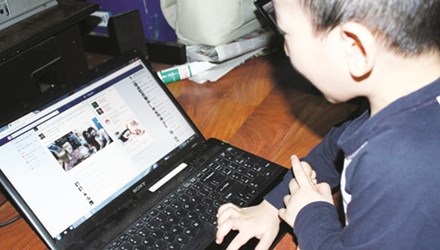
VietNamNet Bridge – Many Vietnamese parents believe that the virtual world on social networks is not a good environment for children.
(http://english.vietnamnet.vn/fms/education/107708/social-networks-spoil-children--many-parents-believe.html) 


Social networks, children


Phan Thu Linh, 14, an eighth grader in Thu Duc District in HCM City, is one example of its deleterious effects.
She once was an excellent and obedient student.
However, things changed after he got a laptop from parents as a birthday present. Her scholastic achievements got worse, while she often used bad language during conversations with adults and prefered using slang words.
Tuyet, 38, Linh’s mother, was shocked when she realized that Facebook was the “culprit” that caused the changes to her daughter.
“She spent all of her time with her computers. She stayed in her room all day and accessed social networks,” Tuyet said. “When I asked what she was doing, she lied and said that she was doing school work. But I found out that she spent most of her time chatting with strangers”.
“I decided to stop using internet services. It was too dangerous for my daughter,” she said, adding that her daughter picked up bad habits from the virtual world on social networks.
Nguyen Thi Luong, 35, has been in distress for the last several months after hearing from the son’s teacher that the boy, Tuan, had often “exchanged blows” with classmates recently.
A schoolgirl complained on Facebook that she was regularly teased by the boys of the next class. Tuan and some classmates left comments saying that the teasers were the bad boys and should be expelled from school.
Meanwhile, the students of other classes commented that the schoolgirl deserved the tease because she was “sour and scornful”.
As the verbal battle on internet was unsettled, they decided to meet each other to find who would be the winners through fighting.
In another case, Manh Hung, an office worker, complained that his daughter, a third grader, does not have a “happy childhood” because of Facebook.
The girl does not spend her free time to play, help parents with housework or go out with parents. She would rather stay at home and chat with friends on Facebook.
“She gazes at the computer screen all day,” Hung complained. “She has become shortsighted, though she is just a third grader”.
“I cannot understand what is so interesting that she finds on social networks. I am afraid that she will become incommunicative, because she uses her hands more regularly than her mouth,” he said, adding that he considers prohibiting her from accessing social networks.
However, Phan Van Tu, MA, a lecturer at the HCM City University of Social Sciences and Humanities, said imposing a ban is not a good solution to settle the problems.
Tu said there are always two sides of a coin. If someone can use social networks in a reasonable way, he would get benefits from the networks.
Bui Hong Quan from the HCM City labor department noted that it is not feasible to prohibit children to access the internet and social networks because these are a part of the modern life.
“What parents can do is give advice to their children on how to use social networks in the most reasonable way,” Quan said.
Tien Phong
posted Julia Talysheva

Friday, July 18, 2014

Identifying Network Influencers

Very good piece on how to use SNA to identify and visualize influencers in Twitter networks

Wednesday, July 16, 2014

Welcome Hult SNO Class - July, 2014

And welcome to the class blog. The combined wisdom and research of hundreds of students I've taught is contained in the posts below this one. It's a very good and searchable database of information on social networks, social media, analysis, and random ephemera.

You'll be adding a graded post as part of the course, but please feel free to post any article of interest to the class, and to others. This is how you build a networked organization. Anyone can read it, but you'll receive an email invitation to join it so that you can post to it. Please respond as soon as you get it because invitations expire.

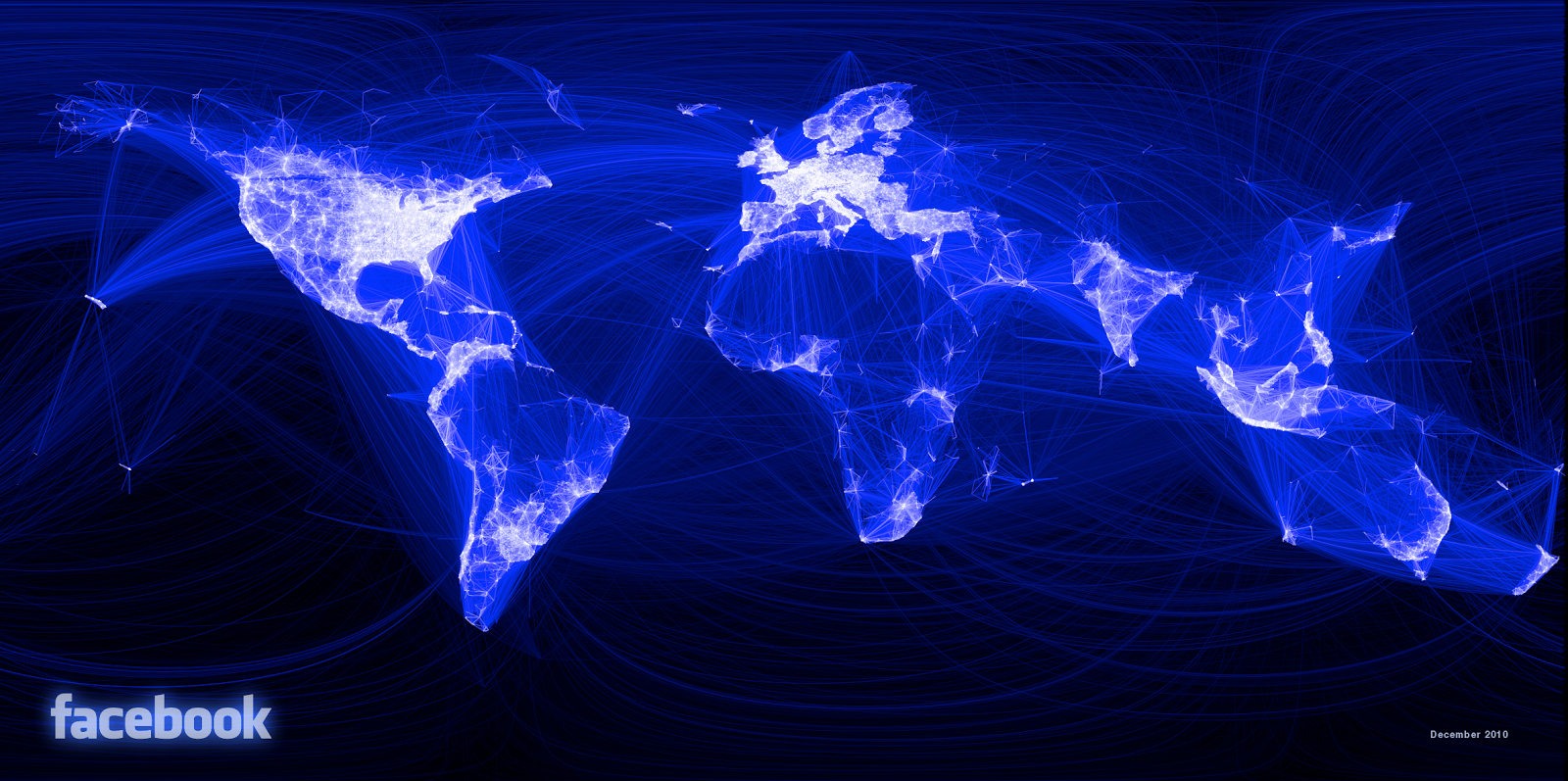
For starters, click on the post title (above the Facebook map) to read the article "3 Things you need to know about the Networked Economy." It's a brief intro to what you'll be learning, with lots of interesting links.