Thursday, September 18, 2014

SNA All-Star: Lynn Smith-Lovin

Lynn Smith-Lovin


A sociologist/social psychologist by training, Smith-Lovin currently teaches at Duke University in the Women’s Studies program where she is the Robert L. Wilson Professor of Sociology.

She describes herself as follows: “I’m interested in the basic question of how identities affect social interaction. I use experimental, observational, survey and simulation situations where unusual things happen to people, then seeing how they respond behaviorally or emotionally.”[1] She also studies how “identities, actions and emotions affect one another.”[2]

In terms of social network analysis, she has published on how social networks have changed in recent decades and the idea of homophily.[3] Not only does she find that “birds of a feather flock together,” but also that bonds between non-similar individuals dissolve more quickly than bonds between individuals who are most similar. Race and ethnicity, she finds, are the greatest dividers followed by education, religion, gender and occupation.[4]

Her research has also examined network size in the United States. She found that Americans’ mean network size has decreased in the past three decades and that people have fewer contacts through associations (think Robert Putnam’s Bowling Alone).

Her work on gender focuses on power dynamics and perceptions of gender within social networks. These networks and interactions can reify status beliefs, but situations where women have higher power or advantage compared to men are more likely to upend the typical gender system. [5]

She only has 84 connections on LinkedIn. This leads me to believe she may not actually be as interested in social networks and the importance of networks as she says. Alternatively, she may be reflecting the trend she has observed of smaller network size.

-Emily


[1] Duke University, Women’s Studies, “Lynn Smith-Lovin,” http://womenstudies.duke.edu/people?Gurl=&Uil=1849&subpage=profile
[2] Ibid.
[3] Miller McPherson, Lynn Smith-Lovin, and Matthew E. Brashears, “Social Isolation in America: Changes in Core Discussion Networks over Two Decades,” American Sociological Review 71, no. 3 (June 1, 2006): 353–75, doi:10.1177/000312240607100301.
[4] Miller McPherson, Lynn Smith-Lovin, and James M. Cook, “Birds of a Feather: Homophily in Social Networks,” Annual Review of Sociology 27 (January 1, 2001): 415–44.
[5] Cecilia L. Ridgeway and Lynn Smith-Lovin, “The Gender System and Interaction,” Annual Review of Sociology 25, no. 1 (1999): 191–216, doi:10.1146/annurev.soc.25.1.191.

SNA All Star Damon Centola


Damon Centola is the Assistant Professor of Behavioral and Policy Sciences at MIT where his work focuses on the relation between social networks and social contagions. Most of his work since 2009 focuses on how social networks affect health related preferences and can guide policies that want to spread a certain type of positive behavior within a community.

To study how people a desired behavior Centola ran an experiment to see how responsive people were to an online fitness program, depending on the network that the program represented. We may have observed that people with certain negative habits tend to interact primarily with one another, limiting their interaction with others who may have better habits. This makes it difficult to enforce positive changes. This concept is applicable to the health related behaviors as well. People who are less healthy tend to display this ‘homophily’ or similarity among their contacts. Could a network of clustered people then create a faster spreading positive behavioral change? Centola recreated this situation on an online community where he paired participants as “buddies” based on their interests and personal characteristics like age, BMI etc. He then placed participants in two networks: one with long ties and those with just large clusters of people. He found participants in clusters responded much more positively than participants with longer ties. Moreover, social reinforcement was observed when having more health buddies participate in a similar program made a participant return frequently to the program. Therefore closely clustered groups can be faster at spreading a certain behavior, especially in the context of disease prevention. Studies on behavioral implications of social networks can better guide our policies to achieve maximum impact in a short time. “Neighborhood effects” cause better spillovers for desirable health behaviors. The picture below depicts the diffusion of habits in a clustered group (right) versus a group with long ties (left). Clustered group shows faster diffusion (represented by blue dots)


Watch this video to see how the public-health networks can be better targeted for spreading preventative habits!


SNA All-Star: Ferdinand Tönnies


Ferdinand Tönnies (born 1855, died 1936) was a German sociologist and philosopher. He is considered to be the first German sociologist and was the co-founder of the German Society for Sociology. He taught as a private lecturer at the University of Kiel and was heavily influenced by the work of Thomas Hobbes.


His best known contribution to the field of sociology was his distinction between two types of social groups: 
  • Gemeinschaft, (“community”) – groupings of people based on a feeling of togetherness. (e.g. a neighborhood or family)
  • Gesellschaft (society) – groups of people sustained by an instrumental goal or aim. (e.g. a state.)
Tönnies argued that every social organization has its own type of collective will, which differs depending on the type of organization. Communities have essential-will (Wesenwille) and societies have arbitrary-will (Kürwille). Essential-will is subconscious and derived from one’s personality. It is used to serve the goals of the organization. Arbitrary-will arises from the desire to achieve a future goal, and the social organization is used by an individual as a means towards an their own goals. These two types of social groupings and ideas of collective will serve as two extremes along a spectrum.

In addition to this famous contribution, Tönnies published over 900 works in the fields of sociology and philosophy, on topics including public opinion, customs, technology, and social contract theory. He was also interested in sociological research methodology and invented his own technique of statistical association.

Notable publications:

1887: Gemeinschaft und Gesellschaft, Leipzig: Fues's Verlag, 2nd ed. 1912, 8th edition, Leipzig: Buske, 1935; his basic and never essentially changed study of social man; translated in 1957 as "Community and Society"

1896: Hobbes. Leben und Lehre, Stuttgart: Frommann, 1896, 3rd edn 1925; a philosophical study that reveals his indebtedness to Hobbes, many of whose writings he has edited

On Sociology: Pure, Applied and Empirical, edited by W.J. Cahnman and R. Heberle, Chicago: University of Chicago Press. (Collection of English translated work)

SNA All Star: Robert V. Gould


Roger V. Gould was an influential sociologist who sought explanations for social upheavals large and small in the subtle texture of interpersonal relationships.

Dr. Gould was born on Oct. 12, 1962, in Brookline, MA. Gould attended the Dalton School and earned bachelor's and doctoral degrees at Harvard University. Gould was a professor at the University of Chicagofor a decade and then a professor at Yale University. From 1997-2000 he served as the editor of The American Journal of Sociology. Gould's work Insurgent Identities: Class, Community and Protest in Paris from 1848 to the Commune (Univ. of Chicago, 1995) was noted for its building its case on a study of the archives which led to a rejection of the class theory of Paris revolutions. He examined local archives before concluding that the traditional explanations for the turbulence of that period were wrong. It was not a class struggle, he argued, but a turf battle in which one's neighborhood and one's associates were more important than economic status. Gould also wrote Collision of Wills: How Ambiguity About Social Rank Breeds Conflict (Univ. of Chicago 2003) which was published posthumously. Gould also contributed to anthologies of social scientific methods.

His emphasis on hard research was not intended to reject theory but to strengthen it. He suggested that by closely studying enough different conflicts, whether in places like Corsica or in an American urban neighborhood, it might be possible to arrive at overarching theories to explain the violence.

Dr. Gould died of leukemia on April 29th, 2002 at the age of 39. In addition to his mother, Mr. Gould is survived by his wife, Erin Graves Gould, and a brother, Anthony C. Gould of Manhattan.

SNA All Star: George Homans

George Homans, an American sociologist, was a key contributor to the development of social network analysis in the sociology trajectory. 

Influenced by Lawrence Henderson, Elton Mayo, Radcliffe Brown, Malinowski, and Lloyd Warner, Homans focused his research on systems, social relations and their structures especially in small groups. This research led to his classic work “The Human Group” (Homans, 1950) that has influenced other theories such as James Coleman’s (1990) – ‘Theory of Social Action and Capital’. 

Homans conceptualizes human interaction in two different systems: an external system composed of a set of relations among group members, and an internal system which emerges out of the external system and which reacts to that system. 

His book is the first comprehensive account of small-group research that combines the insights from psychology and social anthropology. Homans' book describes and synthesizes all techniques and theoretical insights such as matrices, socio-grams and kinship diagrams that were being used in his day. His book is important for social network analysis in that it offers a theoretical framework linking social relations with sentiments, a framework that later developed into what has come to be known as exchange theory.

SNA All-Star: Ronald S. Burt


Ronald S Burt is currently a professor of Sociology and Strategy at The University of Chicago Booth School of Business. Burt's background was originally in physiological and social psychology, with which he earned a B.A in Social and Behavioral Science from Johns Hopkins University. For his graduate study, he moved on to the field of Sociology, in which he earned an M.A. from SUNY Albany and a Ph.D. from the University of Chicago. 


Upon completing his graduate education, he turned to research on social networks and, in particular, the competitive advantage a network can provide to both individuals and organizations. In his research, Burt primarily focuses on social capital, or the expected benefit that can be derived from the relationships an actor has, and structural holes, which refer to situations in which two or more clusters possess non-redundant information. His work began in force in the early 1980s, and has continued through the present day.

Much of Burt’s research is conducted with him as the sole author, though several of his publications over the past decade have included Jennifer Merluzzi as a co-author. In addition, Burt’s dissertation advisor was none other than James S. Coleman, a fellow SNA All-Star. Moreover, his dissertation committee included Edward Laumann, another SNA researcher.

His recent publications include:

"Reputation and Status as Contingency Factors," January 2014 working paper

"Embedded Teams: Network Brokers and Positive Anchors in IBD Medical Care," R. S. Burt, Gavin W. Hougham, Christopher S. Lyttle, David O. Meltzer, and Peter S. Margolis, December 2013 working paper

"Embedded Brokerage: Hubs versus Locals," R.S. Burt and Jennifer Merluzzi, 2014, Research in the Sociology of Organizations, edited by Stephen P. Borgatti, Daniel J. Brass, Daniel S. Halgin, Giuseppe Labianca, and Ajay Mehra

Neighbor Networks, 2010 Oxford University Press

SNA All-Star: Robert Putnam

Robert Putnam is a political scientist and currently a professor at (and former Dean of) the Harvard Kennedy School of Government. Putnam focuses on questions of social capital, civic engagement, and community in America. His work sparked a wave of what have been called “network capitalists” — those interested in understand the relationship between social networks, network structure, and beneficial outcomes.

He is a co-founder of the Saguaro Seminar, which he currently co-chairs with his regular collaborator, Lewis Feldstein (who is a MALD, by the way).  The Saguaro Seminar is an effort to understand social capital and community engagement in order to create civic renewal.

Putnam has written fourteen books, including the widely cited Bowling Alone, and has conducted research on comparative political elites, Italian politics, and globalization.  Putnam came to Harvard after teaching at the University of Michigan and serving on the staff of the National Security Council.

Putnam’s most recent book, American Grace, (with David Campbell) uses data from national surveys on religion and civic engagement to explore the role of religion in American public life.  His current work, to be published in 2015, examines on the growing class gap among American youth and the implications it has for social mobility.  

SNA All-Star: Alex Bavelas


Alex Bavelas was a researcher at MIT. He did most of his social networks related work in the 1940’s and 1950’s. Bavelas was a social psychologist, but he also used mathematics to formalize the definition of his theories.
He worked as part of a group at MIT called The Group Networks Laboratory. Some prominent members of the group include R. Duncan Luce, Leon Festinger or Perry.

With his group at MIT, Alex Bavelas designed a number of experiments centered around issues of communication and information diffusion within small groups. In particular, this work focused on how information travelled within a small group of actors, and which kind of network structures affected the speed and efficiency of this information diffusion. These experiments led to the development the concept of centrality. For Bavelas, centrality rested on the notion of distance. Therefore, a central actor is relatively close to other actors in the network, and they are optimally positioned for integrating information from the dislocated parts of the network.
This also led to the development of the centrality index, which was used as an indicator for how quickly information would travel through the network. This centrality index is still used nowadays but it is referred to as “centralization”.
The Group Networks Laboratory also developed mathematical formulas to better measure centrality and centralization. Both of these concepts are key notions of social networks analysis, and the work of Bavelas and his team is a cornerstone in the science of analyzing human interactions.

Two of the major articles published by Alex Bavelas:
Bavelas, A. (1948) “A mathematical model for group structures”, Applied Anthropology, 7: 16-30
Bavelas, A. (1950) “Communication patterns in task-oriented groups”, Journal of Acoustical Society of America, 57: 271-82

Entry is based on Prell "Social Network Analysis"

SNA All-Star: Stanley Wasserman

Stanley Wasserman is currently teaching at University of Indiana as a professor of Statistics, Psychology and Sociology. His research topics range from social networks to mathematical sociology and applied statistics. Wasserman is a fellow of the Royal Statistical Society, and an honorary fellow of the American Statistical Association and the American Association for the Advance of Science.

Wassermans’ diverse expertise led him to set a milestone in the works of social networks. Having researched on methodology for social networks for over forty years, Professor Wasserman is known for his work on statistical models for social networks. In particular, Wasserman contributed to advancing the exponential random graph models (ERGMs).

With his partner Philippa Pattison, Stanley Wasserman expanded on the existing work of Frank and Strauss (1986) to improve the Markov Graph model. Initial probability models (p1) had been restricted to assuming dyadic independence of actors. Generally referred to as p* model, Wasserman and Pattison developed a more general formula which permitted the model to include a wider array of networks.

Wasserman co-authored a book with Katherine Faust, “Social Network Analysis: Methods and Applications”. It has been considered a comprehensive introductory book on the topic and currently they are in preparation of publishing its second edition. Professor Wasserman’s most recent articles include “Social networks and violent behavior”. 


Wednesday, September 17, 2014

SNA All-Star: Duncan Watts

Duncan Watts is an Australian researcher on social networks and collective dynamics at Microsoft Research. Prior to joining Microsoft, he was a member of the external faculty at the Santa Fe Institute, a sociology professor at Columbia University, and a principal research scientist at Yahoo! Research, where he directed the Human Social Dynamics Group. Watts holds a B.Sc. in physics from the University of New South Wales and a PhD in theoretical and applied mechanics from Cornell University.

In 1998, Watts and Steven Strogatz published a widely read and cited paper entitled “Collective Dynamics of Small-World Networks,” in which they presented the first network model of the small world phenomenon. The paper was regarded as a significant breakthrough in the field of complex networks. Then, in 2001, Watts recreated Stanley Milgram’s small world experiment using email—finding that the average number of intermediaries through which the “package” had to go was six.
A prolific publisher in scientific journals, Watts is also the author of three books: Six Degrees: The Science of a Connected Age, Small Worlds: The Dynamics of Networks between Order and Randomness, and most recently Everything is Obvious: How Common Sense Fails Us, which argues that peoples’ use of common sense reasoning and history frequently leads to misconceptions about human behavior.


SNA All-Star: F.J. Roethlisberger

Born in 1898, Fritz Jules Roethlisberger, a social scientist and management theorist, studied engineering at MIT and philosophy at Harvard, before joining the faculty at Harvard Business School.

Roethlisberger is known as one of the founders of the "human relations movement." He was involved in the well-known Hawthorne Studies series, which examined employee relations and insight into behavior, including the relationship between productivity, morale, and and physical conditions, at Western Electric Company plan in Illinois. Roethlisberger published the study findings in the book "Management and the Worker."

This SNA All-Star's work contributed to the human relations movement, which studied the behavior of people in groups, especially in professional settings. Along with his colleague Elton Mayo, Roethlisberger's work served as a foundation for the fields of human resource and industrial management. F.J. Roethlisberger went on to teach industrial research and human relations at Harvard Business School until he died in 1974.

SNA All Star: Brian Uzzi

Brian Uzzi is a Professor at the Kellogg School of Management, Northwestern University, co-directs the Northwestern Institute on Complex Systems, is the faculty director of the Kellogg Architectures of Collaboration Initiative (KACI), and holds professorships in Sociology at the Weinberg College of Arts of Sciences and in Industrial Engineering and Management Sciences at the McCormick School of Engineering. 

Professor Uzzi largely focuses on embeddedness. His paper, “The Sources and Consequences of Embeddedness for the Economic Performance of Organizations: The Network Effect,” examined how network structure affects economic action. The results found that embeddedness is a system of exchanges and firms that tap into network opportunities in their respective markets are more successful than those that maintain distance in their relationships.


In addition to his research into embeddedness, Professor Uzzi, along with Jarrett Spiro, analyzed 474 Broadway musicals between 1945 and 1989 to better understand what features correlated to a successful show. The ultimate conclusion was that for a show to be considered an innovative hit, the team shouldn’t have too much experience working together but also shouldn’t be complete strangers. What was deemed as the “Q” factors found that there needed to be common ground, but not too comfortable of a relationship that would likely produced what had already been done. The Q factor could additionally be rated by the “clusteredness” of the network, leaving an individual with high to low Q value. Successful shows were found to have an embedded network where everyone’s Q was not too low or too high, and reflected the entire network surrounding the production instead of an individual show.

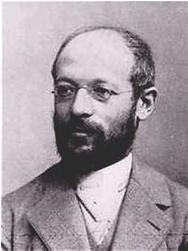
SNA All Star: Georg Simmel (1858-1918)


Simmel 01.JPG

Georg Simmel (1858-1918) was a German sociologist and professor at the University of Berlin. He founded the German Society for Society along with his contemporaries Max Weber and Ferdinand Tönnies.

Simmel studied social structure and was especially interested individual and small group dynamics as a means of better understanding macro-level phenomena. He is well known for his work exploring the distinctive dynamics that occur between pairs of individuals, dyads, versus between three individuals, triads – concepts which he addressed in his book Philosophy of Money (1907). Simmel explained that individuals maintain their own identity when part of a dyad, however, this shifts with the entry of an additional actor. In triads, small group dynamics begin to emerge which causes individuality to diminish and become subordinate to the group.  This discovery has had important implications for the analysis of social networks. The role of an individual in a triad can take on a variety of functions – as a broker mediating between two others and fostering the establishment of alliances or, conversely, as an actor operating in a coercive manner. Understanding the nature of triadic relations can help analysts better understand the dynamics of a network including, Simmel argued, of larger structures (ie. institutions and cultures).

Simmel struggled to gain recognition during his lifetime, but his works have since become foundational in the study urban sociology, symbolic interactionism and social network analysis.


Additional works of interest to the field of social network analysis include: The Metropolis and Mental Life (1903), The Stranger (1908), and “The Web of Group Affiliations” (1955[1908]).